How to use music and art with a loved one living with dementia
(Aging Untold) — Music, dance, poetry, storytelling and art can still tap into emotion and long-held experiences for someone with dementia.
While they do not cure dementia, they can support mood, dignity and connection.
Start by looking locally
Amy O’Rourke, an aging expert, said families can begin by searching for available resources in their own area.
“Dance and dementia. Arts and dementia. Music and dementia,” O’Rourke suggested.
She shared an experience of seeing the impact during her first job out of college.
O’Rourke was an activity director, where residents took part in a bell choir at the time.
“Each resident had a bell and the director would point, and you could just see the impact it had on them,” O’Rourke said.
Don’t set expectations
O’Rourke also described a caregiver who took a client with a memory impairment to an art class, and the client started producing pictures and watercolors.
“She had never done art before. She had never drawn. She had never done any kind of artwork at all,” O’Rourke said. “And so I realized, don’t put any expectation on someone with a memory impairment. Anything is possible.”
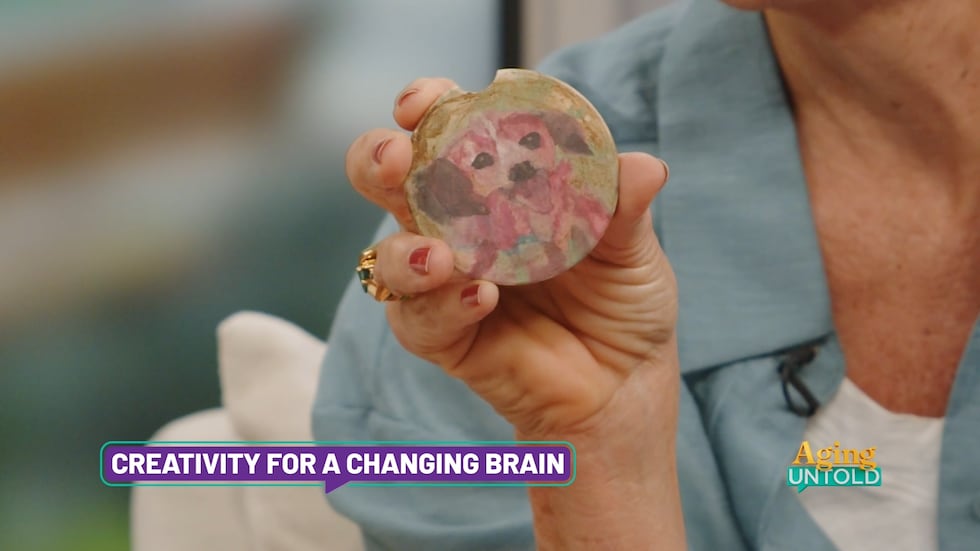
“Look locally and just think about the connection that they’re going to have inside and with you,” O’Rourke said.
Tapping into long-term memory
Gerontologist “Sam” Cradduck said the arts often use a different part of the brain.
“You’re tapping into something that maybe hasn’t been affected yet,” Cradduck said. “And it does hold some long-term memories. Think about smells, we oftentimes associate smells and memories, arts and memories. And the old gospels. That’s the one that I find taps in a lot when it comes to music.”
Cradduck described a video of Naomi Feil, who she said is the mother of the validation technique in dementia training. In the video, Feil is with a woman who had not spoken for a number of years.
“She just started tapping her arm and singing ‘Jesus Loves You,’” Cradduck said. “She just kept doing it, and she got faster and faster with the rhythm. All of a sudden, this woman who hadn’t spoken a word in years started singing this song.”
Cradduck said the arts tap into some core memories.
Telling the story a different way
While dementia changes memory, it does not change how a person tells their story, Dr. Rhea Rogers, a board-certified physician, said.
“They find a different way to tell the story,” Rogers said. “In terms of creativity and the arts, that is a different area of the brain and a lot of times it’s not impacted by dementia.”
A calming activity
Aging well coach Katherine Ambrose said the benefits extend beyond memory.
“It’s not just memory. It’s cognition,” she said. “You’re tapping into a creative outlet that might give people a way to express themselves, which is calming.”
Ambrose said the arts also help caregivers.
“It gives you a peaceful activity that everyone can be a part of,” Ambrose said. “Sometimes it can be agitating, but most of the time it’s worth trying because it can be something really powerful for therapy and a powerful form of care.”
Dementia can take away a person’s abilities, but it does not remove a person’s ability to feel, Cradduck added.
“You can feel beauty and you can feel rhythm,” she said.
Key takeaways
- Search locally. Look for local resources such as dance, arts and music programs for people with dementia.
- Set no expectations. A person with a memory impairment may take to art without having done it before.
- Expression can be calming. The arts can give people a way to express themselves and give caregivers a peaceful shared activity.
This program is provided for educational and informational purposes only and does not constitute providing medical advice or professional services. The information provided should not be used for diagnosing or treating a health problem or disease, and those seeking personal medical advice should consult with a licensed physician. Always seek the advice of your doctor or other qualified health provider regarding a medical condition. Never disregard professional medical advice or delay in seeking it because of something you have seen on this program. If you think you may have a medical emergency, call 911 or go to the nearest emergency room immediately. No physician-patient relationship is created by this program or its use. Aging Untold/Gray Media, nor its employees, contractors or agents, nor any contributor to this program, makes any representations, express or implied, with respect to the information provided herein or to its use.
Copyright 2026 Gray Media Group, Inc. All Rights Reserved.