Virginia Democrats look to set redistricting special election for April 21
CHARLOTTESVILLE, Va. (WVIR) - It’s full steam ahead for Virginia Democrats as they work to redraw Congressional lines ahead of 2026 midterm elections, now with legislation to set a special election date for April 21 advancing through the House of Delegates.
Now that the General Assembly has passed a constitutional amendment that allows for mid-decade gerrymandering, the measure is on track to go to the voters in the form of a “yes or no” question on the ballot.
“Should the Constitution of Virginia be amended to allow the General Assembly to temporarily adopt new congressional districts to restore fairness in the upcoming elections, while ensuring Virginia’s standard redistricting process resumes for all future redistricting after the 2030 census?” the proposed referendum language reads.
While voters now know the likely language and date of the referendum, one thing that remains a mystery is what a new Congressional map would actually look like. Democratic State Senator Creigh Deeds, who represents Virginia’s 11th District, says they’re working on drawing maps right now and are aiming to make the final version public by the end of January.
“The view has been that the people deserve the right to know exactly what they’re voting for,” Deeds said.
Right now, Democratic representatives in Virginia enjoy a 6-5 majority in Congress. Deeds says the Democratic caucuses in both the House and the Senate are working with consultants to develop a map that would give them three or even four additional seats.
Some Democratic leaders, like Virginia Senate President Louise Lucas, have pushed hard for a 10-1 map, though Deeds would not say which ratio he’s backing.
“I’m going to wait until we can see what the product is going to look like,” Deeds said. “I think there will probably be some arm twisting toward the end to try to figure out how we can get a map that everybody can agree to.”
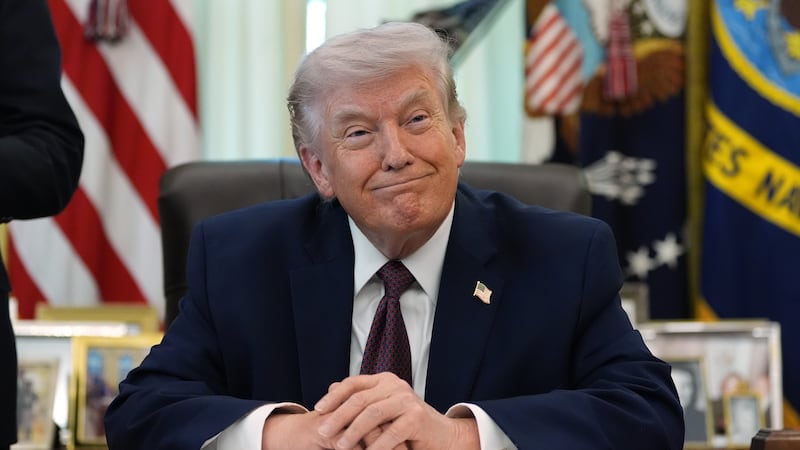
Senator Deeds and other Virginia Democrats have maintained throughout the redistricting effort that it’s simply a response to President Donald Trump’s push for new maps in other states, particularly in Texas.
Delegate Katrina Callsen, the Democrat representing Virginia’s 54th District, says it’s only a temporary measure, one that does not eliminate the independent Redistricting Commission that voters chose to establish in 2020 to avoid gerrymandering.
“It’s time constrained,” Callsen said. “We are going to go back to regular cycle districting in five years.”
Republicans, however, have slammed the effort as a power grab, one that State Senator Luther Cifers says will have lasting effects on the state.
“The depth of the divisiveness that will result from this, I’m not sure anybody is fully appreciating,” Cifers, a Republican representing Virginia’s 10th District, said. “If we look to other states for the worst behavior that we can find and then try to emulate that, it truly is a race to the bottom.”
Now, Cifers is appealing to Virginians - on either side of the political aisle - to vote “no,” as the last line of defense.
“The districts that are...that are just simply going to have their representation stripped away from them are the rural districts like mine in the 10th, and those voters are the only ones that can get out there and stop this,“ Cifers said. “Besides that, it’s just appealing to the conscience of every Virginian to do the right thing here.”
Thus begins a new and unusual campaign season in Virginia, one which is certain to cost both sides a good deal of money.
Larry Sabato, Director of the University of Virginia’s Center for Politics, says you can expect to see a good deal of television advertisements, though it’s unlikely to be an exact replica of what the statewide election looked like.
“Usually, advertising doesn’t matter that much anymore...but it actually does on referenda, because people don’t understand the issue,” Sabato said. “You’re going to have to have a lot of TV and other kinds of advertising just to be able to get the basic message across...If the sides are smart, they’re not just going to air the usual vicious, ‘the world is coming to an end’...they’re going to have to make people laugh and chuckle and see the relevance of these issues.”
Though it’s been quite the hot-button issue in Virginia politics, don’t expect turnout to be “sky-high,” Sabato says.
“I’m old enough to be realistic –that’s not going to happen," Sabato said. “You’re going to have a low to moderate turnout.”
To actually set the mechanics of an April 21 election, lawmakers will have to pass legislation and get a signature from Governor Abigail Spanberger, Deeds tells 29News. Because governors play no role in the passage of constitutional amendments within the General Assembly, Spanberger has not yet been required to take decisive action on the issue.
Though the newly inaugurated governor hasn’t been a champion of redistricting throughout the effort, she did voice support for the response in her address to the General Assembly on January 19.
“Virginia’s proposed redistricting amendment is a response to what we’re seeing in other states that have taken extreme measures to undermine democratic norms,” she said to lawmakers Monday. “This approach is short-term, highly targeted, and completely dependent on what other states decide to do themselves. For those who may oppose Virginia’s response, I call on you to make clear your opposition to what is happening in other states.”
Deeds told 29News he’s confident the legislation will earn Spanberger’s approval.
“I don’t anticipate that being a problem, but certainly she can change her mind, and I don’t think that’s going to be an issue,” Deeds said.
Cifers, on the other hand, hopes the Governor can break away from the caucus.
“I think it would be a remarkable display of leadership in very partisan times,” Cifers said.
As for who’s going to pay for the special elections - Deeds says it’s a responsibility that will likely fall on the localities.
“Democracy has a cost, and generally localities are stuck with the bill,” Deeds told 29News, adding that he’s hoping the state can shore up some money to offset the costs.
Though it’s essentially impossible to draw Congressional lines that would provide Southwest Virginia with Democratic representation, almost everything else is fair game, according to Sabato.
“Everybody is waiting for that map, and that doesn’t just include voters, it includes the potential candidates and the actual candidates that have already announced for districts that will no longer exist,” Sabato said.
That includes incumbent Representatives John McGuire (R-District 5) and Eugene Vindman (D-District 7).
“Free and fair elections are the foundation of our democracy, and Donald Trump is trying to rig the midterms by demanding states like Florida, Texas, and North Carolina redraw their Congressional districts,” Vindman wrote in a statement to 29News. “This unprecedented power grab would diminish Virginians’ voices in Washington, and this amendment is a temporary but necessary response to this unprecedented moment. Voters not politicians will ensure Virginia has fair and transparent maps ahead of 2026.”
29News reached out to McGuire’s team for an interview and a statement but did not receive either.
Do you have a story idea? Send us your news tip here.
Copyright 2026 WVIR. All rights reserved.