Virginia lawmakers spar over redistricting push in special session
CHARLOTTESVILLE, Va. (WVIR) - Virginia Democrats are moving forward with plans that would allow the Commonwealth to draw new Congressional lines ahead of next fall’s midterm elections.
On Monday, the House of Delegates passed a resolution that kickstarts the process and allows lawmakers to officially consider a constitutional amendment, which would provide an opportunity to redistrict mid-decade. The move pushes Virginia deeper into the nationwide political battle over seats in the U.S. House of Representatives.
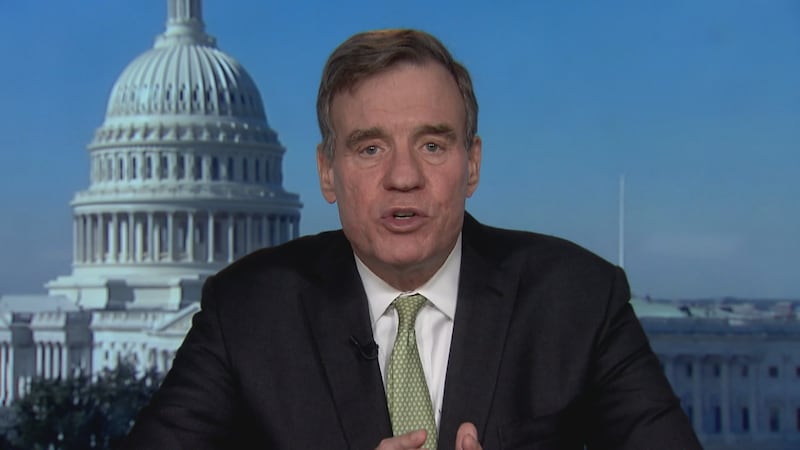
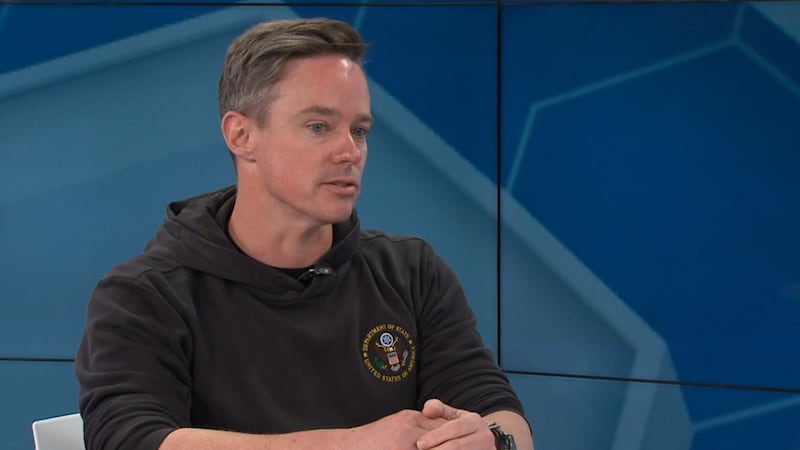
“In many respects, we’re in uncharted territory,” said State Senator Creigh Deeds, the Democrat who represents Virginia’s 11th District.
It’s territory - specifically, Congressional districts - that is now at the forefront of Virginia’s General Assembly special session that began Monday. Republicans in Richmond have already pounced on the subject, with Governor Glenn Youngkin calling it a “desperate grab for power” and Republican gubernatorial nominee Winsome Earle-Sears similarly denouncing it as a “political power grab.”
Deeds defended the effort in an interview with 29News Tuesday, contending that the amendment would mark a response to the Trump administration’s push for redistricting in Texas and other Republican states.
“We didn’t start this battle,” Deeds said. “I think that we have a responsibility to counterbalance this authoritarian executive that is now in the president’s office, and to do that we’re going to have to figure out a way to create more seats, so we can have true competition.”
54th District Delegate Katrina Callsen, also a Democrat, told 29News that their moves in the special session are a necessary precaution.
“We are not drawing maps right now,” Callsen said. “We are not redistricting now. We are making it so that it’s an option if we need it next year.”
In order to change Virginia’s congressional districts, the General Assembly would have to change the state’s Constitution. In 2020, Virginia voters passed a constitutional amendment to place a bipartisan commission in charge of redistricting efforts, aiming to make the process less political.
State law requires that the legislature pass a constitutional amendment twice, with an election in between to give Virginians the chance to elect a new General Assembly. Then, the issue goes to a public referendum.
That means that Democrats in Richmond have just days to pass that first step.
“There’s a massive concern with how quickly this is being jammed through,” said State Senator Luther Cifers, who represents Virginia’s 10th District. “It’s important to me that the voters are part of this discussion and so far, the narrative is a partisan power struggle, and voters have been an afterthought.”
Cifers says initiating this process just a week before the election does not give voters proper time to consider who they want to elect as their delegate in the context of the redistricting push, and that those who have already early voted did not get that option at all.
“They have a right to vote out their legislators if they so choose,” Cifers said. “That’s what the whole purpose of the intervening election is...When we go into these processes with our votes already decided, not based on our citizens, but based on a power struggle that we perceive that’s going on nationwide, that is not our place as Virginia legislators.”
But Callsen believes that, because the process includes a referendum, passing the constitutional amendment will give voters more of a say.
“A logical step is to make sure that our state is prepared and that Virginians can weigh in on congressional districts at a time when they are being rapidly redrawn across the country,” Callsen said.
Cifers also condemned what he calls a lack of transparency from the Democrats, adding that Virginia Republicans were unaware of the effort before this week and were not able to see the language of the proposed amendment.
“We have about one foot of visibility,” Cifers said. “When only one side knows of the text that’s in the resolution, they can kind of craft this narrative, and we’re defenseless to speak against that because we haven’t been privy to any of this process up to this point.”
Deeds says talks about potential redistricting surfaced in the spring, when Texas first answered President Trump’s call and began the process of drawing new maps.
“We knew that our democracy was at risk, and we knew this was a possibility, so there’s been some conversation about what’s going on for some months,” Deeds said. “It hasn’t always been loud, and certainly not public, but there’s been some conversation.”
Larry Sabato, Director of the University of Virginia’s Center for Politics, said he’s surprised - not that Democrats are doing this, but that it’s only public now.
“What surprises me the most is apparently the leadership has been planning this for some time, and they managed to keep it a secret,” Sabato said. “That’s unusual, right there.”
Sabato says that Democrats likely wanted to avoid the issue becoming a focal point of the campaign season, which it would have had the news broken earlier.
Now, Sabato says, it’s probably too late to produce any major changes in outcome.
“Most people who are going to vote early of course have already sent in their ballots,” Sabato said. “The election day is so cluttered with candidates and issues and TV ads and all the rest of it that it’s hard to focus on any one thing.”
Both Deeds and Callsen maintain that the special session and passage of a first amendment is merely a way to keep their options open. Both also say that the bipartisan commission formed in 2020 will remain intact.
For redistricting to actually happen before the congressional filing deadline, Sabato says everything would have to go in the Democrats’ favor.
“There’s no margin for error, and that’s at multiple turning points,” Sabato said. “We’ll just have to watch it unfold because I don’t think it’s guaranteed to go one way or another.”
A significant hiccup is already brewing. On Tuesday, Attorney General Jason Miyares called the initiative unconstitutional and a “last-ditch effort” in an opinion addressed to House Minority Leader Terry Kilgore.
“Allowing an amendment to be proposed and approved while a general election is underway undermines the voice of Virginia voters and violates foundational principles of Virginia constitutional law,” Miyares wrote.
Deeds says they’ll only go through with redistricting if other states are still doing the same by next winter.
29News asked Deedds how he would respond to any legal challenges.
“The courts will have to weigh in on it, I guess, but that’s okay,” Deeds said. “I don’t see the amendment falling if we can get it passed...Let the challenges come.”
Do you have a story idea? Send us your news tip here.
Copyright 2025 WVIR. All rights reserved.