Tensions grow over role of Virginia local police amid immigration crackdown
CHARLOTTESVILLE, Va. (WVIR) - Concerns over immigration enforcement in Charlottesville are mounting as more and more pressure comes in from Washington and Richmond.
The issue has sparked questions about what role local law enforcement should play, amid both the federal and statewide crackdown on immigration.
“This question comes down to, to what extent do we, as a local jurisdiction, want to cooperate with the federal government?” said Alyson Ball, who has researched immigration policy for years and is a volunteer with the International Rescue Committee.
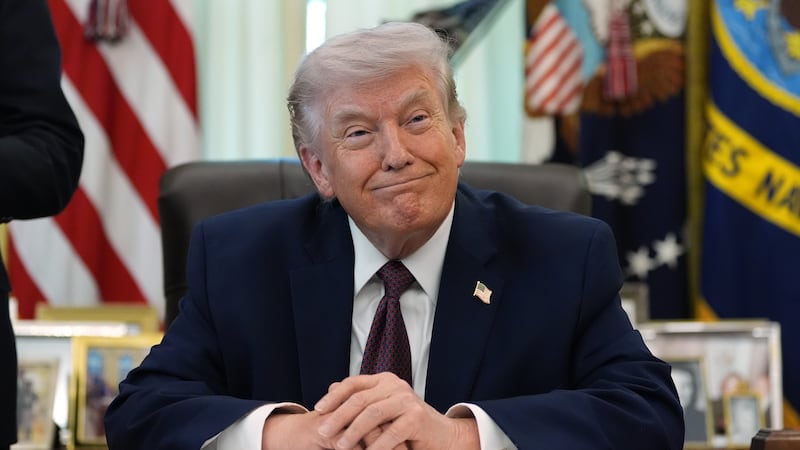
This question, along with scenes like the one during ICE arrests at an Albemarle County courthouse in April, is what brought several people to Charlottesville City Council’s July 7 meeting. One by one, they condemned President Donald Trump’s “Big Beautiful Bill,” which triples the budget of Immigration and Customs Enforcement, and asked the City to stand firm in the face of federal power.
“There’s a lot of pressure right now on local jurisdictions... to cooperate more closely with ICE and with all these immigration arrests that we’re seeing,” Ball said. “There’s not only pressure in Virginia from the federal government, but there’s also an executive order from Governor Youngkin.”
Executive Order 47 formed a statewide task force and directed local law enforcement agencies to assist in immigration enforcement and requested that localities “fully cooperate with” ICE. Through the order, various cities and counties across Virginia have also signed into 287g agreements with ICE, in which law enforcement agents are deputized to support federal immigration efforts.
Youngkin says his task force has now surpassed more than 2,700 arrests of “dangerous criminal illegal immigrants.”
“Some of our local law enforcement partners has translated into the national model of success,” Youngkin said, crediting local cooperation and collaboration. “This works, and there are results to show it. Virginians are safer.”
But Charlottesville Police Chief Michael Kochis told 29News that they will play no role in this effort.
“I could promise you they weren’t touting our cooperation, because that’s not something that we do,” Kochis said. “We are not cooperating when it comes to immigration enforcement, because that’s not our job.”
That’s why, just about a month ago, Kochis sealed off Flock camera data access to any locality outside of Charlottesville, citing concern over federal access.
Now, a new report from WRHO has revealed that at least five Virginia localities have shared their Flock footage with federal agencies for immigration enforcement. Just this week, the Richmond Police Department apologized after the Bureau of Alcohol, Tobacco, Firearms, and Explosives used its Flock data for immigration enforcement without express permission.
“I think we clearly made the right decision, and we did it early on‚" said Kochis in response to the situation in Richmond, adding that it didn’t surprise him.
29News asked Kochis if there is any chance that any federal agency has been able to access Charlottesville Flock data, which only lasts for seven days.
“No, and I say that with that amount of clarity, because we don’t participate in those task forces,” Kochis said. “Number two, our audits, our random audits that we do, show who uses it, when they use it, and why they use it. And none of that has happened with our system.”
29News also asked Kochis what his response would be if a federal agency requested or demanded Charlottesville footage.
“A no,” Kochis said. “It’s that simple. Unless you have a search warrant or a subpoena for data like that.”
It’s a stance could put a target on Charlottesville’s back, Ball says, and could potentially lead to repercussions such as withholding of federal funds.
“What that does is it puts us in a category in the minds of the federal government that we are a sanctuary city, which is a term that doesn’t really have a good definition,” Ball said, pointing to the since-deleted Department of Homeland Security list that identified both Charlottesville and Albemarle County as sanctuary cities. “Will we cooperate with the federal government, and perform these arrests on their behalf?”
In a statement to 29News, a spokesperson for Governor Youngkin said the following:
“Thanks to federal and state law enforcement working together through the Virginia Homeland Security Task Force, more than 2,700 arrests have been made of illegal immigrant criminals since February 25th,” he wrote. “It’s been disappointing to see some localities obstruct these efforts, failing to put the safety of their residents first. As the Governor has stressed again and again, localities need to stop playing politics and work with state and federal law enforcements to protect their communities.”
But Kochis is standing firm, arguing that it’s the crackdown that has left parts of Charlottesville feeling less safe.
“I’ll be honest, what’s happening, what they’re doing, is making our job harder,” Kochis said. “Police chiefs... work really hard at building trust within a community, and right now, you have a segment of our community, within the City of Charlottesville, that are just scared to death. And the last thing that I want as a police chief, is to have a victim of a crime hesitate calling us, and I’m afraid that could happen now.”
As ICE continues to expand and immigration enforcement becomes more aggressive, Ball says, the tension between federal, state, and local agencies will only grow.
“They only have about 6,000 people who are agents who can actually make the arrests, so if they can enlist more people with more money... there will be more arrests in our communities,” Ball said. “I fully expect throughout the country that there will be more people hired to do more arrests, and more people working with ICE in order to make more arrests across the country.”
As someone who has worked with refugees for years, and with a wealth of immigration policy expertise under her belt, Ball also offered own her perspective on what this crackdown could mean for the nation.
“The trend is not a good one for our country, and I think that what we’re seeing is the dehumanization of a very important part of our population,” Ball said. “There’s a bigger picture here of what’s happening within our country, within our culture, within our economy, that is playing out, and I don’t think it has a good ending.”
29News also reached out to a spokesperson for Attorney General Jason Miyares and the Legal Aid Justice Center but did not hear back.
Do you have a story idea? Send us your news tip here.
Copyright 2025 WVIR. All rights reserved.